The seventh Belgrade International Film Festival for and by People with Disabilities, BOSIFEST was held from 1st to 3rd June this year. Besides the films shown at the Belgrade Youth Centre, the additional program consisted of workshops, panel discussions and round tables. From 250 submitted films, 34 films were chosen for the three day repertoire. Festival had a competitive and non-competitive program, consisting mostly of documentaries, experimental and poetic, with the shortest lasting 4 and the longest 95 minutes. Along the significant number of films of domestic production, films also came from all over the world: Germany, Great Britan, the USA, France, South Korea, Argentina, Holland, Poland, South Africa, Spain, Belgium, Ireland, Iran, Australia, Austria and Russia.
DIRECTOR OF FESTIVAL, DARKO IVIĆ, FOR DISABILITY PORTAL:
I am very happy that this year we have had guests from Ireland, Germany, Poland, Croatia and Spain. Considering our budget, we are very proud of the fact, as guests are the ones that make the festival and they are its ambassadors. Besides the versatile and high quality film program, we organized two very successful workshops. One was related to a library as a unique space for intergration – as cultlure is not luxury but our real need. At the other, interactive workshop, the students of design self-initiatively took photographs with examples of architectural barriers, then all the participants and guests gave ideas of how to solve the problem of (in)accessibility. We have established great cooperation not only with faculties, but elementary and secondary schools, as well. On the second day of the festival, when film Retina, which slightly resembles The Little Prince, was shown, elementary school students from the audience were approaching the author of the film to express their delight. It was really nice. Generally speaking, this year festival was very good.
Why The Power of Creativity?
This is a slogan which shows that people with disabilities can make films, act and do music. Giving the festival this name, I was thinking about how, through film and images, we can present all the creativity that people with disabilities can develop in cooperation with professionals. 80% of the films at this year festival are dealing with this exact topic. When it comes to the selection of the films, I have had only two criteria: that the films should not be melodramatic and that the films are not workshoplike, but real, professionally made films. To have an idea for a film is great, to act in it, as well. However, the process of making a film is complex and cannot be done only by one person, than it is not a film but a workshop. Our brilliant film Restart is a story about a sculptor and painter who gets multiple sclerosis. The film shows, in a fantastic way, his struggle with a new condition, struggle between creative desire and physical limitations. Working with a group of children with developmental disabilities and teaching them how to paint, he manages to fulfill his own creative impulse. What he could not do physically, his students did for him. By helping others he was actually helping himself – this represents reciprocity in its full meaning.
We have also shown the film about the most successful world photographer from Spain who became blind, but it did not end his career. Thanks to new technologies, he has still been actively taking photographs to this very day and is very successful. Many life stories shown during this festival are woven around the topic of creativity. Our goal has been to connect our young authors, NGOs and people with disabilities with foreign producers and authors, so that they can exchange experience and learn how to make films, and the Power of Creativity has been the subject matter of the entire project.
Does it mean that this year festival shows disability as an element of artistic creation?
Of course, it has been our goal from the start as creativity does not recognize disability. Whatever you do – write, paint, take photographs, act – as I mentioned the example of the film Restart, there is apsolutely no barrier for creative expression.
What makes the Seventh BOSIFEST different from the others?
We managed to establish cooperation with a great number of educational institutions. During previous years we mainly worked with secondary schools, and this year the cooperation was widened to faculties and elementary schools. So we are reaching wider audience of different age groups. We have also established cooperation with three similar festivals: in Marseille (France), Antalya (Turkey) and Barselona (Spain). On 3rd December, on International Day of Persons with Disabilities, we should sign a protocol on cooperation. It means that starting next year, each director of the festival will propose 3 to 4 domestic films, which will then directly enter the competition part of the next festival. This year we have had the best films – I say that every year, and every year I am right. We got films whose majority of participants are people with disabilities, with their creative stories and potentials. It is noticeable that each year we lift the level of the festival to a higher level.
Can you tell us, which your favourite film is?
There is more than one, and I would not like to favour any of them, as the jury is the one that give the awards. The autobiographical Russian film Vasilii Eroshenko is brilliant, as well as the film I have already mentioned, Retina which is visually really extraordinary.
What happens after the closing of the Festival?
As we opened it, I expect to close it in the same way – with the cinema full of satisfied audience.
Then we start promoting BOSIFEST in other cities in Serbia: Novi Sad and Šabac are the cities with which we have already made an agreement to go and show some of the films. We are already setting new goals for the next BOSIFEST which, I know for sure, will be even better.
SELECTION OF FILMS SHOWN ON THE THIRD DAY OF THE FESTIVAL
- ON PEOPLE WITH VISUAL IMPAIRMENT
- I was going out with him because he was so good at describing things…except, of course, the girls he used to dance with in front of me. He liked flirting in my presence, thinking I do not notice…The film The Best Way, whose author is Angelika Herta from Germany, is narrated in a monotonous computer voice. The reader is called Stefi and she says the word Fazebuk at least 150 times a day (enough to rename all the social networks). Only white subtitles on the black screen follow the every day life of a blind woman with an incalculable number of boring obstacles: from going shopping through mishaps with (mostly married) men, to quarrels with her daughter and mischeves her grandchildren do with the voice program on her computer. Film is full of black humor and monotonous robotlike laughter. Is there anything crueler than giving a blind person a ticket for a silent movie? Why do we think that all blind people (should) love dogs? Why do we say as blind as a bat, when some bats see three times better than humans?
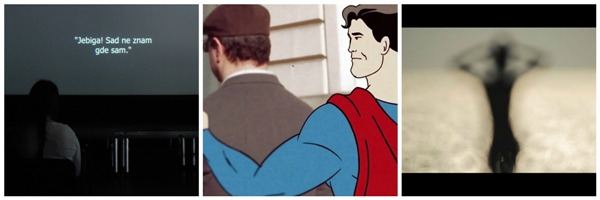
Who is Joe Shuster? A paper boy. A courier with a complete vision loss. A comic book artist robbed of his most popular hero. Joe Shuster was the co-creator of Superman.
Spanish film This is Joe, whose author Francis Diaz Fontan, presents Joe’s biography and the history of his comic book hero through a number of short effective scenes.
- We see things as preschool children look at the books: it is just a bunch of black dots. When they are joined, you get a picture. Joining Dots is a British film whose author is Pablo Romero-Fresco. The first documentary about sound recording, which shows how a theatre and a film can become approachable for people with visual impairment. The significance and meaning of audio description is shown through a story about Trevor, a man who lost his sight almost over night, at the age of sixty. After a period of depression, Trevor has learned to watch through sounds. (While laughing his wife says that he is still a grumpy old man and nothing is going to change that.)
- Sound is light…I see by touching…I fell in love at first hearing…Serbian film called Looks with Close Eyes, whose author is Dora Filipovic is an art and research film about an infinite number of ways in which people with visual impairment can find their way in the environment and clearly see the world with other senses. They can distinguish between a bus and a car by the sound of the wheels. And not only that, but: - I know exactly which number bus is coming! We recognize people by the sound they make when they walk, as it is the sound imprint of their character. It is quite enough to hear them once, a decade can pass: - I will recognize them again, much easier than some people recognize faces.
- If we relied more on touch and energy we would make less mistakes…
- ON SEXUALITY
Contraversial and complex question of a new profession, told through personal experience. Sexual assistant – professon, prostitution, abuse of power, altruism? This and many other questions are raised by a film called Profession – Sexual Assistant, by the American author Rebecca Loyche. One of possible answers is: - It is like sexual education, with practical lessons, everybody should be entitled to it. Why should sex be a subject to be avoided? Undisturbed sexual development is a right we are all deprived of, especially people with physical and mental disabilities. – There is a need for people like me – says a sexual assistant. – Some consider me a whore, others an angel. In both cases my work is devalued.
Have you been brought up believing that you will never experience sex? How to be a sexual person, not having to prove that you really are one? Have they paraded your body at doctor’s examinations? Sins Invalid: an Unshamed Claim to Beauty by the author Patty Berne from the USA is a documentary testimony about a project that cherishes and glorifies artists with disabilities, diversity of bodies and fluidity of sexual identity. For a decade, this project has been exploring the topic of sexuality and esthetic paradigm of disability.
There is no right or wrong body but conscious revolutionary mind.
FROM THE TESTIVAL CLOSING CEREMONY
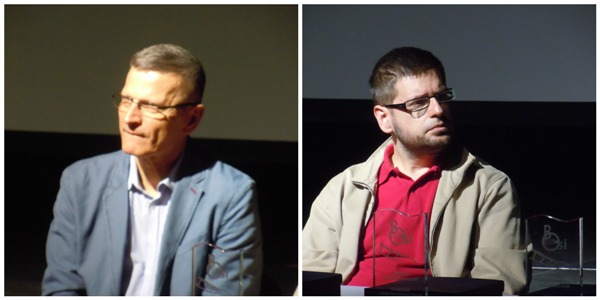
Nebojsa Bradic, member of the jury and Editor in Chief of Culture and Art Programme of RTS:
Films from this festival deserve to be seen, so we will surely find a way, in the next season to show the best films from this festival. In some way this will be the continuation of the festival, as well as the announcement of the next one. These films are the creative answer to a very important, socially responsible topic, and that is the human need to communicate with another human being.
Ivan Karl, vice president of the jury:
This festival breaks down prejudice and stereotypes. Prejudice that we are not all the same, but we are in fact and we have to be. This festival also breaks down the stereotype that the director of the festival is usually not a charming person, and that the selector has to wear glasses and has a beard.
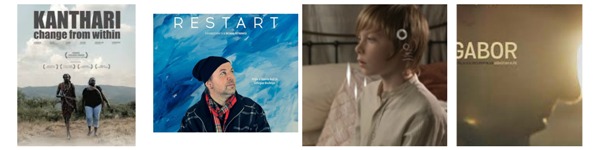
Members of the jury Ivan Karl, Nebojsa Bradic and Vladan Vukosavljevic declared the winners and awarded prizes to the following films: Special Mention to the film KANTHARI: change from within. The author of the film is Marijn Poels and the producer Tomasz Kozakiewicz. According to the jury, it is a film that reflects courage in order to find answers to some crucial questions that involve not only people with disabilities, but also the restless world we live in. Award for the best screenplay was given to Dejan Petrovic for his film Restart. The members of the jury confirm his choice and approach to the subject, express gratitude for the movie Restart, which he filmed and the patience he imprinted in that process. Award for the best director was given to Darko Dragicevic for his film Retina, for the original directorial procedure that’s been shown in the film, in which he combines different expressive elements to create visually extraordinary, imaginary world. Grand Prix for the best film was awarded to the Spanish film Gabor whose author is Sebastian Alfie. The jury decided to declare Gabor as the best film with the most comprehensive work, a story about dedication and commitment to filmmaking that goes beyond the greatest barrier in this profession. The award was received by Ana Nadal, the member of the film crew.
WHAT WILL THIS FESTIVAL BE REMEMBERED BY?
Jelana Gavrilovic, BOSIFEST selector:
The best program we have ever had. This is the third year I have selected the films, and I think that this year we have made the best and the most versatile program. There are so many good films that can be used in education, and there are films that could be shown on other festivals as they are not exclusively about disability, then excellent animations for children, as well as brilliant Serbian films including the film which got the award for the best screenplay. The program is what I am most satisfied with. The power of creativity is almost tangible in all the films and it is what inspires me as a director. I am also dealing with the prejudice and stereotypes I might have had. It is not only that I have changed the way I relate to disability, but I am generally less afraid of unfamiliar things. Through the films we really get to know real people with disabilities, we can understand them better and symphatise without false pity. While watching the film Restart I realized how difficult it is for artists when they are faced with creative block, and how much more difficult it is when disability temporarily imprisons their creative expression. Enormous power is needed to overcome it. And there is also latent prejudice, as we often do not realize that, in the backround of that block there is a driving and progress force. What from one point of view might seem as a disadvantage is very often an advantage from some other point of view. There is no final block, they are all just turning points. And this is the message this festival is conveying.
Raca Risto, collaborator of Hendi Center Koloseum and BOSIFEST:
A huge number of young people and children from elementary schools. Reaching to this population may be the biggest quality of this year festival. At the very beginning, we did not believe that this will become so important, as part of our personal lives and wider community in general. These are the films about people with disabilities meant for everybody. It is important that as many people as possible see them, as the films are not only about physically visible barriers, but about those, much deeper, mental ones. Therefore I think that the post production of these films, by BOSIFEST touring other cities in Serbia, and showing the films on television, is of utmost importance.
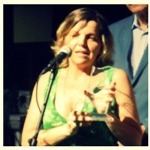
Ana Nadal, the member of the best film Gabor crew:
Unstable weather, kind and modest people, who wore sleevless shirts, while others wore jackets. I am thrilled with Belgrade and would like to come here again with my family. I have received many awards, but none of them is from this sector, nor are dealing with such a special topic. Gabor is an extraordinary story, and there are so many stories with a similar topic which deserve to be made into films. The creative project, we are currently working on, is also a documentary based on real life of an opera singer. Thanks to this kind of festival, stories like this become visible. In Madrid, where I come from, there are a lot of different kinds of artists, with and without disabilities. They are supported by an organization called ONCE, which raises funds to provide services for the blind and people with serious visual impairment.
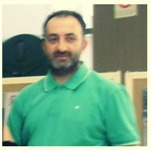
Dejan Petrovic, author of Restart, film awarded for best screenplay:
The fact that my wife submitted my film to the festival and I am sure she will nag me for that. In a way she brought me this award. I have found the inspiration for this film, also at her initiative, which speaks about the idea of my film Restart: whenever we get lazy or become inactive, there must be someone who will give us the energy, love or support. Someone who will empower us to move from being static and make us move on. It is the same with my hero, Darko Babic, self taught painter who was, literally in some kind of self isolation for 10 years, closed and cut away from creating. After 10 years, on his wife’s initiative, he gets an invitation to make an exhibition. This starts a ten-month period of creation and struggle with himself. My greatest award has been the reaction of the audience, especially when I notice that it made them think or even stimulate some kind of change within. The award given by the jury is certainly an acknowledgement that the message of the film has been heard, and great motivation for me to continue working in the right direction. I know how difficult it is to make a selection of good films when the topic is limited, but this festival succeeds in doing so. I have learnt how they approach this kind of films in the world. These days I am working on a creative documentary film dealing with the relativity of human freedom and finding an exit for the individual. It has been filmed in the prisons around Serbia and should be finished by the end of the year.
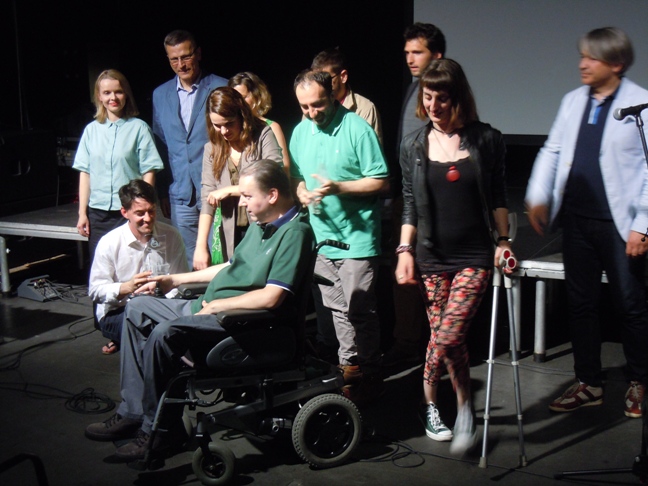


 The jury of Bosifest joins a great number of festivals in the country and in the rest of the world. By awarding Dejan Petrović for best screenplay, it confirms his choice and approach to the subject, expresses gratitude for the movie Restart which he filmed and the patience he imprinted in that process.
 The jury of Bosifest is pleased to announce that the award for best director goes to Darko Dragicevic for the original directorial procedure that’s been shown in the film Retina, in which he combines different expressive elements to create visually extraordinary, imaginary world.
 Jury of Bosifest unanimously decided to declare Gabor as the best film with the most comprehensive work, a story about dedication and commitment to filmmaking that goes beyond the greatest barrier in this profession.
 The jury of Bosifest gives a special mention to film KANTHARI: change from within, that reflects courage in order to find answers to some crucial questions that involve not only people with disabilities, but also the restless world we live in.


